Photos: Prokudin-Gorskii’s Color Photos of Russia, 1907-1915 | Newsweek International | Newsweek.com
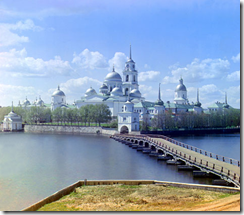
The photos are so much richer than I would have expected to see.
Beautiful.
Photos: Prokudin-Gorskii’s Color Photos of Russia, 1907-1915 | Newsweek International | Newsweek.com
The photos are so much richer than I would have expected to see.
Beautiful.
A Newsweek article, to be published next week, discusses the decline of Christianity in America. Ironically, when I got out of class today, I heard one of the local talk jocks interviewing R. Albert Mohler, Jr. He sounds as much like a jackass as any of the other right-wing religious cranks. He certainly had his anti-gay rights hat on, and it’s the same ol’, same ol’.
But, you already knew that, didn’t you?
http://www.newsweek.com/id/192583/page/1
Charles Gullung / Photonica-Getty Images
RELIGION
The percentage of self-identified Christians has fallen 10 points in the past two decades. How that statistic explains who we are now—and what, as a nation, we are about to become.
By Jon Meacham | NEWSWEEK
Published Apr 4, 2009
From the magazine issue dated Apr 13, 2009
It was a small detail, a point of comparison buried in the fifth paragraph on the 17th page of a 24-page summary of the 2009 American Religious Identification Survey. But as R. Albert Mohler Jr.—president of the Southern Baptist Theological Seminary, one of the largest on earth—read over the document after its release in March, he was struck by a single sentence. For a believer like Mohler—a starched, unflinchingly conservative Christian, steeped in the theology of his particular province of the faith, devoted to producing ministers who will preach the inerrancy of the Bible and the Gospel of Jesus Christ as the only means to eternal life—the central news of the survey was troubling enough: the number of Americans who claim no religious affiliation has nearly doubled since 1990, rising from 8 to 15 percent. Then came the point he could not get out of his mind: while the unaffiliated have historically been concentrated in the Pacific Northwest, the report said, "this pattern has now changed, and the Northeast emerged in 2008 as the new stronghold of the religiously unidentified." As Mohler saw it, the historic foundation of America's religious culture was cracking.
"That really hit me hard," he told me last week. "The Northwest was never as religious, never as congregationalized, as the Northeast, which was the foundation, the home base, of American religion. To lose New England struck me as momentous." Turning the report over in his mind, Mohler posted a despairing online column on the eve of Holy Week lamenting the decline—and, by implication, the imminent fall—of an America shaped and suffused by Christianity. "A remarkable culture-shift has taken place around us," Mohler wrote. "The most basic contours of American culture have been radically altered. The so-called Judeo-Christian consensus of the last millennium has given way to a post-modern, post-Christian, post-Western cultural crisis which threatens the very heart of our culture." When Mohler and I spoke in the days after he wrote this, he had grown even gloomier. "Clearly, there is a new narrative, a post-Christian narrative, that is animating large portions of this society," he said from his office on campus in Louisville, Ky.
There it was, an old term with new urgency: post-Christian. This is not to say that the Christian God is dead, but that he is less of a force in American politics and culture than at any other time in recent memory. To the surprise of liberals who fear the advent of an evangelical theocracy and to the dismay of religious conservatives who long to see their faith more fully expressed in public life, Christians are now making up a declining percentage of the American population.
According to the American Religious Identification Survey that got Mohler's attention, the percentage of self-identified Christians has fallen 10 percentage points since 1990, from 86 to 76 percent. The Jewish population is 1.2 percent; the Muslim, 0.6 percent. A separate Pew Forum poll echoed the ARIS finding, reporting that the percentage of people who say they are unaffiliated with any particular faith has doubled in recent years, to 16 percent; in terms of voting, this group grew from 5 percent in 1988 to 12 percent in 2008—roughly the same percentage of the electorate as African-Americans. (Seventy-five percent of unaffiliated voters chose Barack Obama, a Christian.) Meanwhile, the number of people willing to describe themselves as atheist or agnostic has increased about fourfold from 1990 to 2009, from 1 million to about 3.6 million. (That is about double the number of, say, Episcopalians in the United States.)
While we remain a nation decisively shaped by religious faith, our politics and our culture are, in the main, less influenced by movements and arguments of an explicitly Christian character than they were even five years ago. I think this is a good thing—good for our political culture, which, as the American Founders saw, is complex and charged enough without attempting to compel or coerce religious belief or observance. It is good for Christianity, too, in that many Christians are rediscovering the virtues of a separation of church and state that protects what Roger Williams, who founded Rhode Island as a haven for religious dissenters, called "the garden of the church" from "the wilderness of the world." As crucial as religion has been and is to the life of the nation, America's unifying force has never been a specific faith, but a commitment to freedom—not least freedom of conscience. At our best, we single religion out for neither particular help nor particular harm; we have historically treated faith-based arguments as one element among many in the republican sphere of debate and decision. The decline and fall of the modern religious right's notion of a Christian America creates a calmer political environment and, for many believers, may help open the way for a more theologically serious religious life.
Let's be clear: while the percentage of Christians may be shrinking, rumors of the death of Christianity are greatly exaggerated. Being less Christian does not necessarily mean that America is post-Christian. A third of Americans say they are born again; this figure, along with the decline of politically moderate-to liberal mainline Protestants, led the ARIS authors to note that "these trends … suggest a movement towards more conservative beliefs and particularly to a more 'evangelical' outlook among Christians." With rising numbers of Hispanic immigrants bolstering the Roman Catholic Church in America, and given the popularity of Pentecostalism, a rapidly growing Christian milieu in the United States and globally, there is no doubt that the nation remains vibrantly religious—far more so, for instance, than Europe.
Still, in the new NEWSWEEK Poll, fewer people now think of the United States as a "Christian nation" than did so when George W. Bush was president (62 percent in 2009 versus 69 percent in 2008). Two thirds of the public (68 percent) now say religion is "losing influence" in American society, while just 19 percent say religion's influence is on the rise. The proportion of Americans who think religion "can answer all or most of today's problems" is now at a historic low of 48 percent. During the Bush 43 and Clinton years, that figure never dropped below 58 percent.
Many conservative Christians believe they have lost the battles over issues such as abortion, school prayer and even same-sex marriage, and that the country has now entered a post-Christian phase. Christopher Hitchens —a friend and possibly the most charming provocateur you will ever meet—wrote a hugely popular atheist tract a few years ago, "God Is Not Great." As an observant (if deeply flawed) Episcopalian, I disagree with many of Hitchens's arguments—I do not think it is productive to dismiss religious belief as superstitious and wrong—but he is a man of rigorous intellectual honesty who, on a recent journey to Texas, reported hearing evangelical mutterings about the advent of a "post-Christian" America.
To be post-Christian has meant different things at different times. In 1886, The Atlantic Monthly described George Eliot as "post-Christian," using the term as a synonym for atheist or agnostic. The broader—and, for our purposes, most relevant—definition is that "post-Christian" characterizes a period of time that follows the decline of the importance of Christianity in a region or society. This use of the phrase first appeared in the 1929 book "America Set Free" by the German philosopher Hermann Keyserling.
The term was popularized during what scholars call the "death of God" movement of the mid-1960s—a movement that is, in its way, still in motion. Drawing from Nietzsche's 19th-century declaration that "God is dead," a group of Protestant theologians held that, essentially, Christianity would have to survive without an orthodox understanding of God. Tom Altizer, a religion professor at Emory University, was a key member of the Godless Christianity movement, and he traces its intellectual roots first to Kierkegaard and then to Nietzsche. For Altizer, a post-Christian era is one in which "both Christianity and religion itself are unshackled from their previous historical grounds." In 1992 the critic Harold Bloom published a book titled "The American Religion: The Emergence of the Post-Christian Nation." In it he cites William James's definition of religion in "The Varieties of Religious Experience": "Religion … shall mean for us the feelings, acts, and experiences of individual men in their solitude, so far as they apprehend themselves to stand in relation to whatever they consider the divine."
Which is precisely what most troubles Mohler. "The post-Christian narrative is radically different; it offers spirituality, however defined, without binding authority," he told me. "It is based on an understanding of history that presumes a less tolerant past and a more tolerant future, with the present as an important transitional step." The present, in this sense, is less about the death of God and more about the birth of many gods. The rising numbers of religiously unaffiliated Americans are people more apt to call themselves "spiritual" rather than "religious." (In the new NEWSWEEK Poll, 30 percent describe themselves this way, up from 24 percent in 2005.)
Roughly put, the Christian narrative is the story of humankind as chronicled in the Hebrew Bible and the New Testament—the drama of creation, fall and redemption. The orthodox tend to try to live their lives in accordance with the general behavioral principles of the Bible (or at least the principles they find there of which they approve) and anticipate the ultimate judgment of God—a judgment that could well determine whether they spend eternity in heaven or in hell.
What, then, does it mean to talk of "Christian America"? Evangelical Christians have long believed that the United States should be a nation whose political life is based upon and governed by their interpretation of biblical and theological principles. If the church believes drinking to be a sin, for instance, then the laws of the state should ban the consumption of alcohol. If the church believes the theory of evolution conflicts with a literal reading of the Book of Genesis, then the public schools should tailor their lessons accordingly. If the church believes abortion should be outlawed, then the legislatures and courts of the land should follow suit. The intensity of feeling about how Christian the nation should be has ebbed and flowed since Jamestown; there is, as the Bible says, no thing new under the sun. For more than 40 years, the debate that began with the Supreme Court's decision to end mandatory school prayer in 1962 (and accelerated with the Roe v. Wade ruling 11 years later) may not have been novel, but it has been ferocious. Fearing the coming of a Europe-like secular state, the right longed to engineer a return to what it believed was a Christian America of yore.
But that project has failed, at least for now. In Texas, authorities have decided to side with science, not theology, in a dispute over the teaching of evolution. The terrible economic times have not led to an increase in church attendance. In Iowa last Friday, the state Supreme Court ruled against a ban on same-sex marriage, a defeat for religious conservatives. Such evidence is what has believers fretting about the possibility of an age dominated by a newly muscular secularism. "The moral teachings of Christianity have exerted an incalculable influence on Western civilization," Mohler says. "As those moral teachings fade into cultural memory, a secularized morality takes their place. Once Christianity is abandoned by a significant portion of the population, the moral landscape necessarily changes. For the better part of the 20th century, the nations of Western Europe led the way in the abandonment of Christian commitments. Christian moral reflexes and moral principles gave way to the loosening grip of a Christian memory. Now even that Christian memory is absent from the lives of millions."
Religious doubt and diversity have, however, always been quintessentially American. Alexis de Tocqueville said that "the religious atmosphere of the country was the first thing that struck me on arrival in the United States," but he also discovered a "great depth of doubt and indifference" to faith. Jefferson had earlier captured the essence of the American spirit about religion when he observed that his statute for religious freedom in Virginia was "meant to comprehend, within the mantle of its protection, the Jew and the Gentile, the Christian and the Mahometan, the Hindoo and infidel of every denomination"—and those of no faith whatever. The American culture of religious liberty helped create a busy free market of faith: by disestablishing churches, the nation made religion more popular, not less.
America, then, is not a post-religious society—and cannot be as long as there are people in it, for faith is an intrinsic human impulse. The belief in an order or a reality beyond time and space is ancient and enduring. "All men," said Homer, "need the gods." The essential political and cultural question is to what extent those gods—or, more accurately, a particular generation's understanding of those gods—should determine the nature of life in a given time and place.
If we apply an Augustinian test of nationhood to ourselves, we find that liberty, not religion, is what holds us together. In "The City of God," Augustine —converted sinner and bishop of Hippo—said that a nation should be defined as "a multitude of rational beings in common agreement as to the objects of their love." What we value most highly—what we collectively love most—is thus the central test of the social contract.
Judging from the broad shape of American life in the first decade of the 21st century, we value individual freedom and free (or largely free) enterprise, and tend to lean toward libertarianism on issues of personal morality. The foundational documents are the Declaration of Independence and the Constitution, not the Hebrew Bible and the New Testament (though there are undeniable connections between them). This way of life is far different from what many overtly conservative Christians would like. But that is the power of the republican system engineered by James Madison at the end of the 18th century: that America would survive in direct relation to its ability to check extremism and preserve maximum personal liberty. Religious believers should welcome this; freedom for one sect means freedom for all sects. As John F. Kennedy said in his address to the Greater Houston Ministerial Association in 1960: "For while this year it may be a Catholic against whom the finger of suspicion is pointed, in other years it has been, and may someday be again, a Jew—or a Quaker—or a Unitarian—or a Baptist … Today I may be the victim—but tomorrow it may be you—until the whole fabric of our harmonious society is ripped."
Religion has been a factor in American life and politics from the beginning. Anglican observance was compulsory at Jamestown, and the Puritans of New England were explicitly hoping to found a New Jerusalem. But coerced belief is no belief at all; it is tyranny. "I commend that man, whether Jew, or Turk, or Papist, or whoever, that steers no otherwise than his conscience dares," said Roger Williams.
By the time of the American founding, men like Jefferson and Madison saw the virtue in guaranteeing liberty of conscience, and one of the young republic's signal achievements was to create a context in which religion and politics mixed but church and state did not. The Founders' insight was that one might as well try to build a wall between economics and politics as between religion and politics, since both are about what people feel and how they see the world. Let the religious take their stand in the arena of politics and ideas on their own, and fight for their views on equal footing with all other interests. American public life is neither wholly secular nor wholly religious but an ever-fluid mix of the two. History suggests that trouble tends to come when one of these forces grows too powerful in proportion to the other.
Political victories are therefore intrinsically transitory. In the middle of the 19th century, the evangelist Charles Grandison Finney argued that "the great business of the church is to reform the world—to put away every kind of sin"; Christians, he said, are "bound to exert their influence to secure a legislation that is in accordance with the law of God."
Worldly success tends to mark the beginning of the end for the overtly religious in politics. Prohibition was initially seen as a great moral victory, but its failure and ultimate repeal show that a movement should always be careful what it wishes for: in America, the will of the broad whole tends to win out over even the most devoted of narrower interests.
As the 20th century wore on, Christians found themselves in the relatively uncontroversial position of opposing "godless communism," and the fervor of the Prohibition and Scopes-trial era seemed to fade a bit. Issues of personal morality, not international politics, would lay the foundations for the campaign for Christian America that we know as the rise of the religious right. The phenomenon of divorce in the 1960s and the Roe decision in 1973 were critical, and Jimmy Carter's born-again faith brought evangelical Christianity to the mainstream in 1976.
Growing up in Atlanta in the '60s and '70s, Joe Scarborough, the commentator and former Republican congressman, felt the fears of his evangelical parents and their friends—fears that helped build support for the politically conservative Christian America movement. "The great anxiety in Middle America was that we were under siege—my parents would see kids walking down the street who were Boy Scouts three years earlier suddenly looking like hippies, and they were scared," Scarborough says. "Culturally, it was October 2001 for a decade. For a decade. And once our parents realized we weren't going to disappear into dope and radicalism, the pressure came off. That's the world we're in now—parents of boomers who would not drink a glass of wine 30 years ago are now kicking back with vodka. In a way, they've been liberated."
And they have learned that politics does not hold all the answers—a lesson that, along with a certain relief from the anxieties of the cultural upheavals of the '60s and '70s, has tended to curb religiously inspired political zeal. "The worst fault of evangelicals in terms of politics over the last 30 years has been an incredible naiveté about politics and politicians and parties," says Mohler. "They invested far too much hope in a political solution to what are trans-political issues and problems. If we were in a situation that were more European, where the parties differed mostly on traditional political issues rather than moral ones, or if there were more parties, then we would probably have a very different picture. But when abortion and a moral understanding of the human good became associated with one party, Christians had few options politically."
When that party failed to deliver—and it did fail—some in the movement responded by retreating into radicalism, convinced of the wickedness and venality of the political universe that dealt them defeat after defeat. (The same thing happened to many liberals after 1968: infuriated by the conservative mood of the country, the left reacted angrily and moved ever leftward.)
The columnist Cal Thomas was an early figure in the Moral Majority who came to see the Christian American movement as fatally flawed in theological terms. "No country can be truly 'Christian'," Thomas says. "Only people can. God is above all nations, and, in fact, Isaiah says that 'All nations are to him a drop in the bucket and less than nothing'." Thinking back across the decades, Thomas recalls the hope—and the failure. "We were going through organizing like-minded people to 'return' America to a time of greater morality. Of course, this was to be done through politicians who had a difficult time imposing morality on themselves!"
Experience shows that religious authorities can themselves be corrupted by proximity to political power. A quarter century ago, three scholars who are also evangelical Christians—Mark A. Noll, Nathan O. Hatch and George M. Marsden—published an important but too-little-known book, "The Search for Christian America." In it they argued that Christianity's claims transcend any political order. Christians, they wrote, "should not have illusions about the nature of human governments. Ultimately they belong to what Augustine calls 'the city of the world,' in which self-interest rules … all governments can be brutal killers."
Their view tracks with that of the Psalmist, who said, "Put not thy trust in princes," and there is much New Testament evidence to support a vision of faith and politics in which the church is truest to its core mission when it is the farthest from the entanglements of power. The Jesus of the Gospels resolutely refuses to use the means of this world—either the clash of arms or the passions of politics—to further his ends. After the miracle of the loaves and fishes, the dazzled throng thought they had found their earthly messiah. "When Jesus therefore perceived that they would come and take him by force, to make him a king, he departed again into a mountain himself alone." When one of his followers slices off the ear of one of the arresting party in Gethsemane, Jesus says, "Put up thy sword." Later, before Pilate, he says, "My kingdom is not of this world: if my kingdom were of this world, then would my servants fight." The preponderance of lessons from the Gospels and from the rest of the New Testament suggests that earthly power is transitory and corrupting, and that the followers of Jesus should be more attentive to matters spiritual than political.
As always with the Bible, however, there are passages that complicate the picture. The author of Hebrews says believers are "strangers and exiles on the earth" and that "For here we have no lasting city, but seek the city which is to come." In Romans the apostle Paul advises: "Do not be conformed to this world." The Second Vatican Council cited these words of Pius XII: the Catholic Church's "divine Founder, Jesus Christ, has not given it any mandate or fixed any end of the cultural order. The goal which Christ assigns to it is strictly religious … The Church can never lose sight of the strictly religious, supernatural goal."
As an archbishop of Canterbury once said, though, it is a mistake to think that God is chiefly or even largely concerned with religion. "I hate the sound of your solemn assemblies," the Lord says in Amos. Religion is not only about worshipping your God but about doing godly things, and a central message of the Gospels is the duty of the Christian to transform, as best one can, reality through works of love. "Being in the world and not of it remains our charge," says Mohler. "The church is an eternal presence in a fallen, temporal world—but we are to have influence. The Sermon on the Mount is about what we are to do—but it does not come with a political handbook."
How to balance concern for the garden of the church with the moral imperatives to make gentle the life of the world is one of the most perplexing questions facing the church. "We have important obligations to do whatever we can, including through the use of political means, to help our neighbors—promoting just laws, good order, peace, education and opportunity," wrote Noll, Hatch and Marsden. "Nonetheless we should recognize that as we work for the relatively better in 'the city of the world,' our successes will be just that—relative. In the last analysis the church declares that the solutions offered by the nations of the world are always transitory solutions, themselves in need of reform."
Back in Louisville, preparing for Easter, Al Mohler keeps vigil over the culture. Last week he posted a column titled "Does Your Pastor Believe in God?," one on abortion and assisted suicide and another on the coming wave of pastors. "Jesus Christ promised that the very gates of Hell would not prevail against his church," Mohler wrote. "This new generation of young pastors intends to push back against hell in bold and visionary ministry. Expect to see the sparks fly." On the telephone with me, he added: "What we are seeing now is the evidence of a pattern that began a very long time ago of intellectual and cultural and political changes in thought and mind. The conditions have changed. Hard to pinpoint where, but whatever came after the Enlightenment was going to be very different than what came before." And what comes next here, with the ranks of professing Christians in decline, is going to be different, too.
Read more about NEWSWEEK's poll on religion in America here .
With Eliza Gray
© 2009
Look, she's known all along that something is fishy in the Madoff world of big finance.
In the interest of restoring all of the people who'd been fleeced by this scumbag (Bernie) and any others who may have been party to it, ALL assets of those involved should be seized, sold, and used to repay the victims in this case, particularly the elderly who have been left with absolutely nothing. Find those who helped perpetrate this fraud, squeezing them into confessing, get them to rat out all those associated with this scam, and seize ALL their assets. Oh, yeah, I forget. When all that's done, send them to a cell right next to Bernie's. Let's call this "Lifetime at Bernie's"
I find it incredible that we (the American public and the Federal Government) are expected to believe that Madoff pulled off the biggest financial scam in American history, all by himself. With the thousands of clients that he had, he certainly wasn't creating fake statements, dealing with questions, collecting/depositing "services" fees by himself. It is physically impossible for him to have handled all those details for all those years. I heard a former employee state that toward the end, Madoff was largely out of the office for months at a time. Can't be pulling the strings if you're not in the office.
http://www.msnbc.msn.com/id/29279834
A recent story came out about a pet chimpanzee that attacked a friend of the woman who owned the monkey. I didn’t think too much about it, I mean, how much damage can a chimp inflict? If a chimp thought he could take me, he’d have a serious ass-whooping coming to him. 
My smugness quickly evaporated when I read the story above. Not only does the chimp weigh 200 pounds, but I understand they can be quite strong, especially when enraged. Maybe I wouldn’t fare as well as I initially thought.
I kept reading and in doing so, I came across a description of the woman’s injuries: “The woman lost both eyes, her nose and part of her jawbone in the attack.”
Holy shit. It was so bad that when the cops arrived, one of them thought the victim was a man. Who could blame him?
“After police arrived, one officer radioed back: ‘There's a man down. He doesn't look good,’ he says, referring to the disfigured Nash. ‘We've got to get this guy out of here. He's got no face.’”
OK, this story is all I need to know that I don’t want to be around any monkey, period.
The Paramount Theater was open for the inauguration this morning. They opened at 7. Sadly, I dilly-dallied around the house a little longer than normal, and on the way there, we dropped off the dogs at day care. There were some folks obviously streaming to the theater, but not nearly as many as I expected. This was a good sign.
I headed into the theater and as I did, someone handed me a couple commemorative cards. I grabbed them, thanked the lady, and headed inside. A big line in front of the bar. People, people, people -- get control of yourselves...
I bypassed those folks and headed straight for the door on the first floor. I heard the usher tell the folks in front of me there were only a few single seats available, but that there may be some seats on the 3rd floor balcony. As they turned to leave, I approached the usher and told her I was looking for a single. She said there might be one or two near the front of the stage. Cool. I headed down the aisle, toward the front of the theater, scanning for a possible empty seat as I made my way down. Nothing. The place was packed. I even made it to the front of the theater. Zilch. Zippo. Nada.
I turned and beat a hasty retreat to the lobby. The crowd was buzzing and every time a shot of the soon-to-be first family (or Biden and spouse) appeared, the place went wild. Wow, what the hell have I gotten myself into?
Also worth noting: when bush or cheney appeared on screen, they got a nice healthy booing. How appropriate that DICK was in a wheel chair. The story is that he hurt his back while packing some boxes. I don't believe this story for a second. The last couple of days, I've seen several stories talking about the fact that the outgoing president and incoming president have teams devoted to unpacking EVERYTHING, putting it all into their respective spaces, and having all the boxes, wrapping, etc. gone by the time the family gets to the new home. Why would it be any different for the V.P.s? I suspect DICK couldn't bring himself to stand for the new president. What a poor sport, but given who I'm talking about, not surprising.
I scooted my way up to the 2nd balcony (why sit on 3, when you can have it on 2?). When I got there, and looked up, all I saw were people in seats. Not a single empty (non-reserved) seat to be found. I walked up the side aisle, scanning desperately for that one lone seat, but there was nothing. I eventually found myself on the 3rd floor balcony, and started making my way up. Whoa, I spotted what appeared to be an empty seat. I asked the gal sitting next to it if it was empty and she said yes! Woohoo! I made my way to it and just as I was about to sit down, the gals sitting in the row in front of this seat said, No, that seat's not empty. I looked at the chick how said it was and she said she was wrong and that it was reserved. Thanks for nothing...
I left the aisle and found myself working my way up to the last rows of seats. Nothing free to be found anywhere. I finally found myself at the very back of the theater, in an aisle behind all the seats. I was truly in SRO-land... This kinda sucked. I looked around, and found an open spot next to a wall. I quickly scooted over to get my place, set my briefcase down, and started peeling down. I had dressed for the eventual walk to school, and the bus ride home. It was in the low 30s this morning, so I was pretty bundled up, and now I was a steamy, sweaty mess...
Tops off, I dug into the camera bag, as I intended to document this historic occasion. I dug out the camera, and started trying to take some pictures. They were a complete disaster, and I didn't take a single one that is worth showing. I hate that camera. I guess I was going to have to record this event in my mind. I'll be lucky if I remember tomorrow that I'd even gone.
The screen they set up for the audience was pretty damn big, and the picture was nice and clear. I was amazed when they show the Washington Mall. A truly astounding number of people gathered there to witness one of the most significant events in American history.
In short order, here's how the event played out (order may be off a little).
Time for me to fly.
I suited back up, headed out of the theater, and up the hill to school.
I'm once again a sweaty mess, but am so glad I made it out to witness this event.
Tonight, there will be beer!

A recent story details the recent harvesting of what is potentially the world's largest potato.
Fine, but too big, too small, or just right, I don't eat things that look like hemorrhoids.
Sorry, I just don't.


